andie, she/her, 26, united states. this blog is full of Tolkien. also other art, photos, fandoms, and big-eyes-emoji stuff, but mostly Tolkien. i tag! my girlfriend is bright ivanaskye, who is a lot, but not too much
Obviously starlight is most likely not enough for photosynthesis. (Of course, there has been no
need for such a plant to evolve in the real world…)
What we know: There were plants everywhere during the Spring of Arda, thanks to the Lamps. After their destruction, Yavanna grieved because their growth was “stayed”, and she “set a sleep
upon many things that had arisen in the Spring, so that they should not age”.
There is, however, a mention of growth in dark Beleriand – Nan Elmoth where Elwe and Melian
met and “the trees of Nan Elmoth grew tall and dark before they […]”. Hmm. Of course, that could be an exception due to Melian’s presence, seeing as it’s also mentioned how Doriath is a place of “life and joy” because of her, in contrast to most of Beleriand, and Niphredil blooms there when Luthien is born.
So, the explanation is that the vegetation is under the Sleep of Yavanna, but that doesn’t mean there aren’t a few things to consider:
– Yavanna kept the plants from dying, and if that means they were frozen in time, the Elves could presumably eat them, though they wouldn’t grow back. If “Sleep” means they were like our plants in winter, nutrition becomes more problematic. Their diet might have to be mostly carnivorous, maybe supplemented with roots and nuts or fruit remnants. (Again, since none of it grows back, they’d have to forage and put themselves in danger more and more.)
– Also, there’d be funghi. Lots and
lots of funghi, possibly everyone’s main food source.
– I’m also worried
about the oxygen – the ‘easiest’ explanation I can think of
is that the trees in Aman produced it and Manwe made sure
it was distributed to Middle-Earth, too. (Sounds better than ‘the
Elves didn’t need oxygen’, anyway.)
– Some plants could be getting glucose from somewhere else and transforming
it into other chemicals they need, more like heterotrophs. Maybe the
soil is just full of glucose at the time, courtesy of Yavanna. They’d have pale or unusually colored leaves.
– Any exceptional plants that managed to adapt to the darkness could have died out soon after the Sun rose. Which could have been
hard to get used to for the Elves and possibly Dwarves of
Middle-Earth. Imagine desperately missing your favourite plant or mushroom that used to be really common, went extinct because of the Sun and may or may not exist in Aman but the damn Noldor can’t tell you because they had so much other stuff to eat they never paid attention to the thing you’re describing (this could be part of Eöl’s villain origin story…)
Oooh, I have Thoughts here. (I’m not a botanist, but I’ve had a special interest in earth history since forever, which does mean I know a lot of weird tidbits about how ecosystems work, and how they have worked in the past.)
– To start with– I expect Yavanna’s version of “sleep” for the plants would be more like stasis than like winter, given Tolkien’s tendency to associate interventions on nature by Valar and Elves with eternal spring and semi-creepy non-flowing of time way more than with winter.
– If that’s the case, the plants not growing back when the Elves eat them is a huge concern. It would probably force them to be pretty nomadic, leaving behind trails of eaten, ravaged plants in their wake. Which on one hand seems aesthetically discordant, but on another hand, it fits their history of always moving westward.
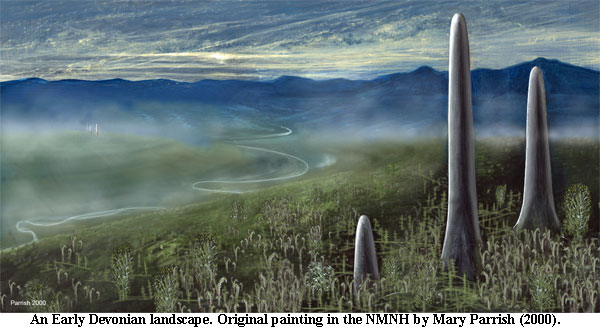
– Carnivory is not a real solution in and of itself, because the animals Elves eat would have to themselves be eating something. Maybe fungi. Speaking of fungi, I immediately think of Prototaxities, which is the weirdest thing you’ve (probably) never heard of. In the real-life history of the earth, right after some plants colonized the land, but couldn’t figure out how to be trees yet… the largest land organisms were giant towers of fungi that got to, like, 26 feet tall. Just lookat these. Seems pretty Tolkien-compatible to me, honestly.
– Chemosynthetic autotrophs (read: things that make their own energy a la photosynthesis, but by using things that aren’t sunlight) seem likely, though on Earth these are all single-celled. They could still be the base of a food chain on Tree-age Middle Earth though; maybe there’s large algal mats that synthesize something, and then fungi consume them, and then either Elves consume fungi directly, or animals eat the fungi and then Elves eat the animals.
– On Earth, chemosynthetic microbes are mostly associated with hydrothermal vents in the deep sea. This is making me imagine land equivalents of them, which would honestly be pretty cool. There could be Pillar of Big Hot Thing that’s way too hot to touch, but has a bunch of animals congregating around it to eat the microbe mats.
– Except that that isn’t quite how hydrothermal vents would work on land; in fact they already kind of do exist on land (geysers and hot springs), but I think the fact that super-hot temperatures don’t boil water when it’s under the kind of pressure it’s under in the deep sea makes a difference…
– Anyway, there’s probably not a direct equivalent, but animals and/or fungi specialized to eat those super-colorful microbes that show up in yellowstone hot springs? Yellowstone-like terrain as some of the most sustaining of life? It’s something to consider.
– There are some other weird chemotrophs out there, too—like bacteria that get their energy from rusting iron. I don’t think they’re very edible, though.
– On the other hand, some weird, non-edible chemotrophs actually make oxygen! There’s a type of bacteria that eats methane and produces oxygen as a waste product, for instance. So that may help with OP’s concerns around oxygen.
– I kinda think that it would be really cool if there were chemosynthetic organisms that weren’t single-celled. Imagine Yellowstone-like hot springs with big ruffly almost-plants at the edge! This would almost definitely be an entirely different kingdom of life, by RL terms, which would be really cool…
– …But since it’s really hard to wipe out entire kingdoms of life, I don’t think that all of these would have died when the Sun came into existence. There’d probably still be pockets of Middle Earth where some early first-age not-plants yet thrive.
– Which is also really Tolkien. I like it.
Tl;dr definitely giant towers of fungi, probably hot springs as one of the best places to get food, very possibly consumed-and-not-regrowing sleeping plants pushing the Elves ever westward.
Obviously starlight is most likely not enough for photosynthesis. (Of course, there has been no
need for such a plant to evolve in the real world…)
What we know: There were plants everywhere during the Spring of Arda, thanks to the Lamps. After their destruction, Yavanna grieved because their growth was “stayed”, and she “set a sleep
upon many things that had arisen in the Spring, so that they should not age”.
There is, however, a mention of growth in dark Beleriand – Nan Elmoth where Elwe and Melian
met and “the trees of Nan Elmoth grew tall and dark before they […]”. Hmm. Of course, that could be an exception due to Melian’s presence, seeing as it’s also mentioned how Doriath is a place of “life and joy” because of her, in contrast to most of Beleriand, and Niphredil blooms there when Luthien is born.
So, the explanation is that the vegetation is under the Sleep of Yavanna, but that doesn’t mean there aren’t a few things to consider:
– Yavanna kept the plants from dying, and if that means they were frozen in time, the Elves could presumably eat them, though they wouldn’t grow back. If “Sleep” means they were like our plants in winter, nutrition becomes more problematic. Their diet might have to be mostly carnivorous, maybe supplemented with roots and nuts or fruit remnants. (Again, since none of it grows back, they’d have to forage and put themselves in danger more and more.)
– Also, there’d be funghi. Lots and
lots of funghi, possibly everyone’s main food source.
– I’m also worried
about the oxygen – the ‘easiest’ explanation I can think of
is that the trees in Aman produced it and Manwe made sure
it was distributed to Middle-Earth, too. (Sounds better than ‘the
Elves didn’t need oxygen’, anyway.)
– Some plants could be getting glucose from somewhere else and transforming
it into other chemicals they need, more like heterotrophs. Maybe the
soil is just full of glucose at the time, courtesy of Yavanna. They’d have pale or unusually colored leaves.
– Any exceptional plants that managed to adapt to the darkness could have died out soon after the Sun rose. Which could have been
hard to get used to for the Elves and possibly Dwarves of
Middle-Earth. Imagine desperately missing your favourite plant or mushroom that used to be really common, went extinct because of the Sun and may or may not exist in Aman but the damn Noldor can’t tell you because they had so much other stuff to eat they never paid attention to the thing you’re describing (this could be part of Eöl’s villain origin story…)


 ephal ephalak idon hi-akallabeth